
Unlocking Workplace Potential with Reasonable Adjustments Guides
Supporting someone with a disability, health condition, impairment or neurodivergence can involve a wide range of considerations. Even with the best intentions, it is not always obvious what workplace barriers someone may experience or which reasonable adjustments could be helpful.
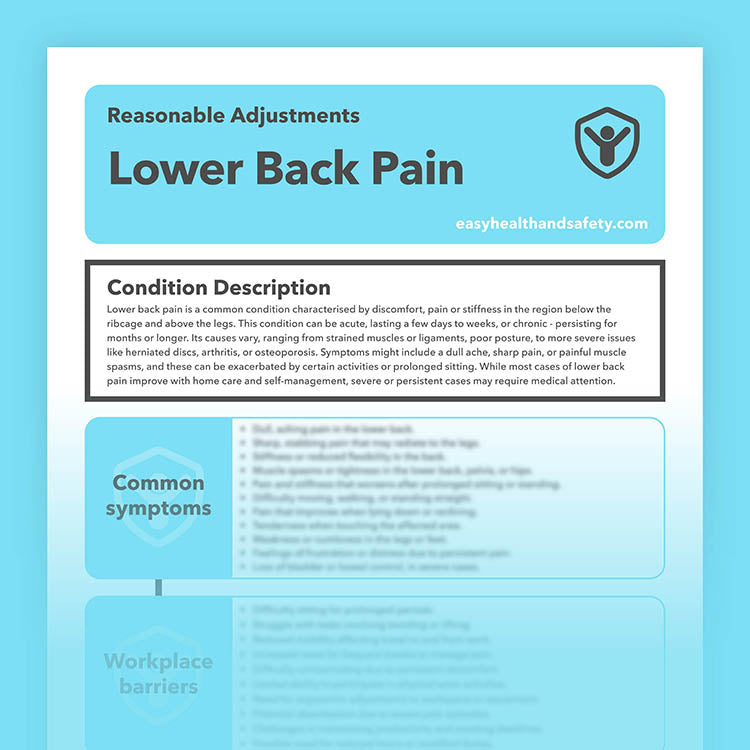
Our Reasonable Adjustments Guides provide a practical starting point. The collection includes 46 condition-specific guides designed to help employees, employers, managers and HR professionals better understand individual needs and explore workplace support without having to research everything from scratch.
What Is a Reasonable Adjustments Guide?
A Reasonable Adjustments Guide is a practical workplace resource focused on a particular disability, health condition, impairment or area of need.
Each guide brings together useful information about the condition or topic, examples of potential workplace barriers, tailored support and reasonable adjustments that could be considered around the individual.
The aim is not to provide a fixed checklist of changes that everyone with the same condition will need. People can experience the same condition very differently, so reasonable adjustments should be considered around the person, their role, workplace, circumstances and specific barriers.
If you are new to the subject, our practical guide to reasonable adjustments at work explains the wider principles in more detail.
What Do the Reasonable Adjustments Guides Cover?
Although the detail varies depending on the condition, the guides follow a consistent structure so it is easy to find the information you need.
Understanding the Condition and Workplace Barriers
Each guide begins with an overview of the condition or topic and considers how it may affect someone at work. This can include common symptoms, characteristics or effects, alongside examples of workplace barriers and practical support that may help.
This provides useful context before considering possible reasonable adjustments.
Reasonable Adjustments During Recruitment
The guides consider support for applicants as well as employees. Depending on the condition and the individual, this might involve considering the application process, interview or assessment environment, accessibility, communication, additional time or other practical support.
Reasonable Adjustments at Work
Workplace support can take many forms. The guides explore relevant areas such as working arrangements, the physical environment, tasks, communication, supportive technology, breaks, supervision and colleague awareness where appropriate.
The examples are intended as starting points for discussion rather than prescribed solutions.
Returning to Work Following Absence
Someone returning after a period of absence may need different support from someone already established in their role. The guides include considerations around returning to work, reviewing working arrangements and tasks, and adapting support as the individual settles back into work or their needs change.
An Editable Notes Page
Each guide also includes an editable notes page with separate areas for recruitment, at work and return from absence. This can be used to record key points and individual considerations, while the rest of the guide remains available as practical reference information.
Why Condition-Specific Guidance Can Be Helpful
Knowing somebody’s diagnosis alone does not tell you what support they will need. Two people with the same condition may experience very different symptoms, barriers and workplace challenges.
Condition-specific guidance can provide useful background information and prompt areas that might otherwise be overlooked, while still keeping the focus on the individual.
It can also make it easier to prepare for a conversation about reasonable adjustments by giving employees, managers and HR professionals a clearer idea of the kinds of workplace barriers and support they may want to discuss.
Reasonable Adjustments Guides for a Wide Range of Needs
Our collection covers a broad range of disabilities, health conditions and neurodivergence, including physical and sensory impairments, musculoskeletal conditions, mental health conditions, neurological conditions, learning differences and long-term health conditions.
You can browse the full collection of Reasonable Adjustments Guides and choose the guide most relevant to the person or situation you are supporting.
Supporting the Individual, Not Just the Condition
The most useful starting point for reasonable adjustments is the individual themselves. A guide can provide ideas, context and practical considerations, but it cannot determine what a particular person needs.
Good support involves listening to the individual, understanding the barriers they experience, considering what may help and reviewing arrangements if their role, workplace or needs change over time.
Used in this way, the guides can help make those conversations more informed and give everyone involved a clearer starting point.
Need Broader Reasonable Adjustments Support?

If you need support across a wider range of individual needs, our Reasonable Adjustments Bundles bring together practical templates and guidance in one place.
The Complete Bundle includes all 46 condition-specific Reasonable Adjustments Guides alongside the Reasonable Adjustments Planner, Policy and Personal Emergency Evacuation Plan (PEEP), providing a broader set of workplace resources at better value than purchasing the products separately.